Gritting: Fact vs Fiction
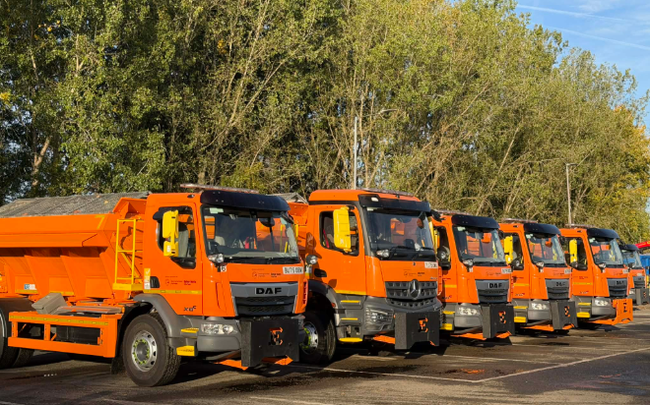
As the temperatures drop, we're getting ready to spread two things across Buckinghamshire this winter: salt on the roads and truth on the rumours.
From gritting myths to cold-weather misconceptions, our Fact or Fiction series is here to provide the answers to your gritting FAQs. So grab a warm drink and join us as we share how we're helping keep Buckinghamshire moving safely this winter.
FICTION - We grit “priority roads” (also referred to as primary routes), including all A roads, all B roads, some C roads and other key roads. These routes focus on roads that carry the highest traffic volumes, key commuter routes, bus routes and roads providing access to essential services. It isn't possible to grit every road across Buckinghamshire.
Approximately 44% of the county's highways network (870 miles) is categorised as a primary route, a significant amount more than other local authority areas.
Did you know? 870 miles is roughly the same distance as driving to Dundee, Scotland and back from Buckinghamshire (via the A1).
FACT - It isn't possible to grit every road across Buckinghamshire, so strategic decisions have to be made to concentrate our resources where we can have the greatest impact across the county. Our primary routes are selected based on nationally recognised winter service criteria, not just whether the road has been reported to us. The criteria includes things like traffic volumes and connectivity.
Our gritting routes are regularly reviewed, and requests from local residents and communities are considered but must meet established operational standards.
FACT - We’re even on call and ready to don our orange hi-vis uniform on Christmas Day! Decisions to grit are based on detailed weather forecasts and road temperatures, which are monitored throughout the winter period. Gritting runs / treatments are timed to be most effective (sometimes during the day, sometimes late at night), ensuring resources are used efficiently while keeping key routes safe.
Following the Winter Parade – where the gritters are taken for a test drive of their usual gritting routes, to help the gritter drivers re-familiarise themselves with the vehicles and the routes, as well as testing the safety of the routes - the fleet are parked up at the 4 depots across Buckinghamshire to wait for the first salting of the season.
FICTION - Grit is often spread before temperatures drop below freezing. The aim is to prevent ice from forming rather than react once roads have already become dangerous. Priority routes are gritted when road surface temperatures – which can be up to 5°C cooler than the air temperature – are predicted to drop below 0.5°C. These temperatures are lower than the air temperatures seen on weather apps and weather forecasts – so gritting will happen even if the air temperatures are predicted to stay above freezing.
FACT AND FICTION – Grit helps prevent ice forming and assists vehicles in gaining traction, but it is less effective in heavy snowfall, freezing rain or extreme weather. Sometimes grit is spread ahead of temperatures falling after rain stops, helping prevent icy conditions developing later. The most important thing to remember is drivers should always adapt their speed to conditions.
FICTION – The primary winter service focuses on keeping the highway network moving safely. Some priority footways and cycleways may be treated (main shopping areas, key pedestrian routes, important cycle routes), but it isn't possible to treat every pavement across the county.
To help keep local footpaths and roads safe, we have approx. 1200 salt bins (sometimes called grit bins, grit boxes or salt boxes) located around the county, which are filled prior to winter, with a programme of additional refills should these be needed following prolonged icy or snow conditions.
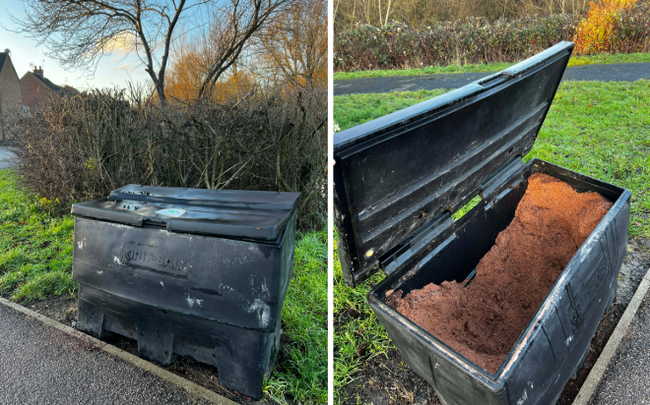
Public salt bin
FACT - Public salt bins are for residents to use on local footpaths and roads (not on private land). There is currently no practical way for us to grit all footpaths across Buckinghamshire, so bins are provided to allow people to take local action while we concentrate our resources where we can have the greatest impact across the county – focusing on roads.
FICTION - Road salt can contribute to corrosion over time, but the safety benefits of preventing icy road conditions far outweigh the impacts. Our gritters are washed down after every trip to keep them looking shiny and orange.
A top tip - regular vehicle washing can help minimise salt build-up!
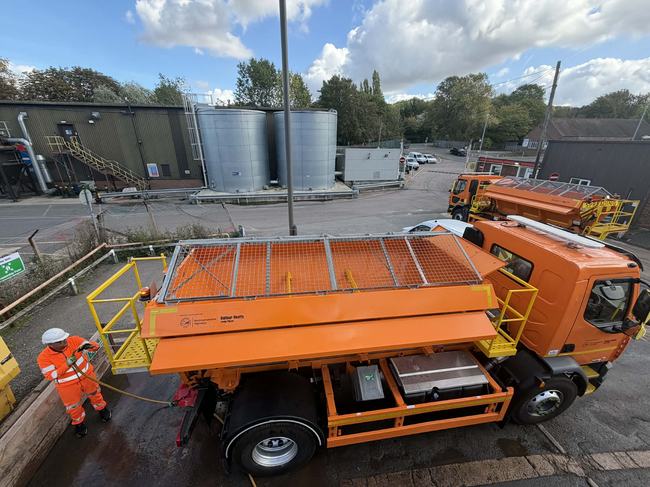
Washing the gritter down after completing a gritting route
FACT - Modern spreading equipment applies precise amounts of salt. Treatment may not always be visible but can still be effective. Follow our Buckinghamshire Highways social media channels to see our live gritting updates and visit: buckinghamshire.gov.uk/winter-roads

The spreading controls in the cab of the gritter
FACT - Last winter 48 gritting runs were completed covering approx. 41,300 miles, meaning the fleet of gritters covered a distance slightly less than travelling around the Earth’s equator twice!
FICITON - “Grit” can refer to a mixture of brown, unrefined salt, sharp sand, and granite dust.
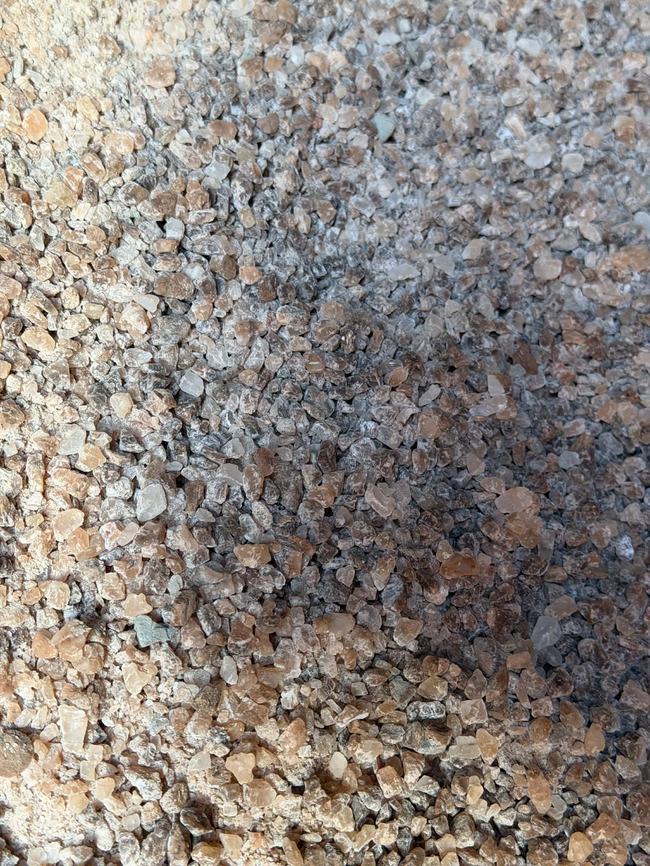
Close up photograph of grit
FACT - Ahead of the start of the season, “grit” is stockpiled and stored in capacity salt barns across the county's four main highway depots (located in Aylesbury, Amersham, Gawcott, and Handy Cross). When filled to capacity, the depots can house up to 8,500 tonnes of grit!
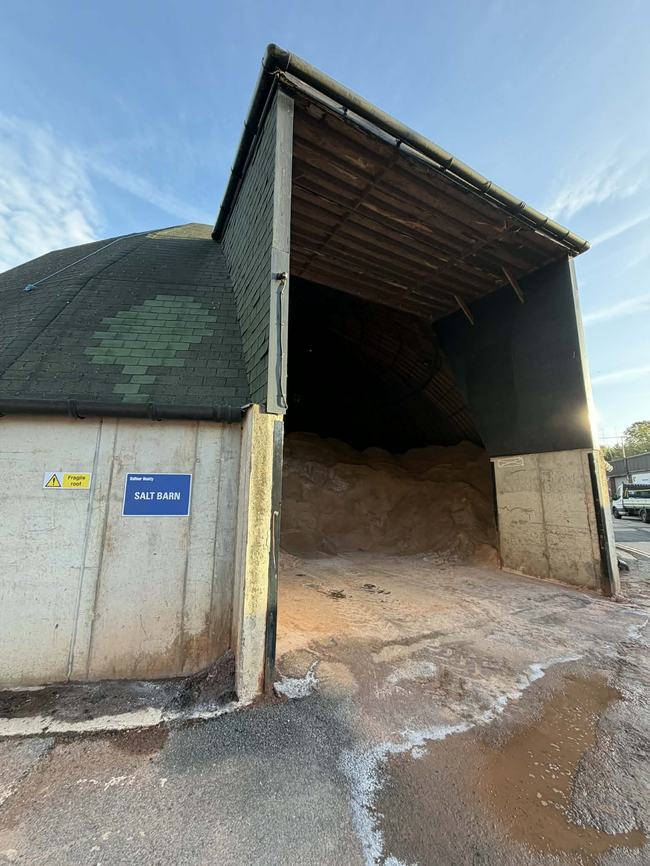
Salt barn at London Road Depot, Amersham
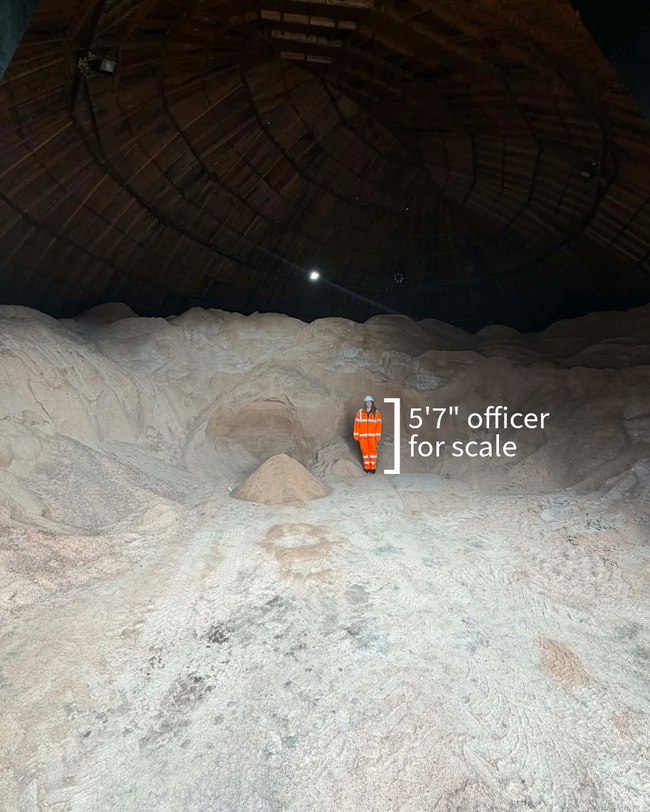
Officer stood inside the salt barn