Buckinghamshire pilot helps food banks provide healthier food
A Buckinghamshire Council–funded pilot has produced practical insights into how food banks can strengthen the healthiness of the food they provide, and what approaches make the biggest difference within day-to-day operational realities.
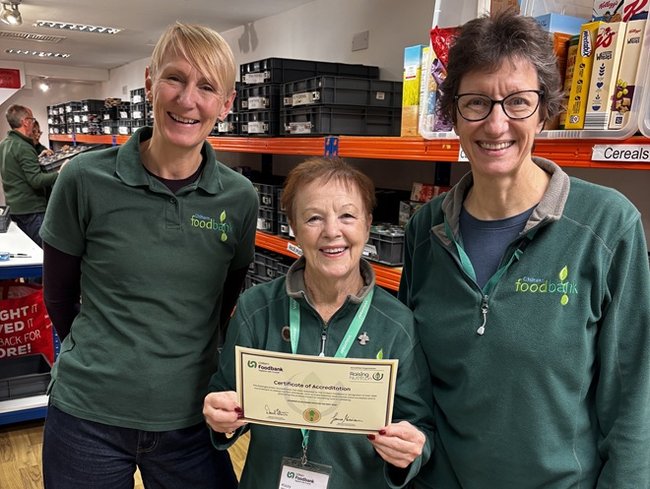
Delivered by RaisingNutrition, the year-long pilot worked with four Buckinghamshire food banks through its accreditation programme, providing tailored training, practical resources and ongoing support to help embed healthier food provision into policies, practices and ways of working. Three food banks – Aylesbury Vineyard, Chiltern Food Bank and Bridge the Gap – have now achieved RaisingNutrition Accreditation. Berryfields Community Store also participated in the wider programme.
Isobel Darby, Buckinghamshire Council’s Cabinet Member for Health and Wellbeing, said: “We are committed to supporting healthier communities across Buckinghamshire, and this pilot shows how practical changes can make a real difference for families using food banks. By focusing on what people can actually cook and eat at home, rather than simply what is donated, this work helps ensure support is both meaningful and nutritionally balanced. It is encouraging to see local food banks leading the way and achieving accreditation through this programme.”
A key focus of the pilot was a simple but powerful question – can a family sit down and make a real meal from what is in their parcel? This shift in thinking, from parcels as a collection of donated items to the starting point for a meal, proved central to the work.
One of the key findings was that analysing nutrition at a very detailed level is difficult in practice, as parcels vary depending on donations and individual items can skew the overall nutritional picture. A more practical and impactful approach was to focus on whether parcels support balanced, everyday meals – particularly whether families receive enough vegetables, both canned and fresh.
Across the three accredited food banks, the changes made are projected to deliver more than 60,000 additional portions of vegetables through food parcels each year. Volunteer confidence in helping clients plan balanced meals rose by 33%, with 47 volunteers trained across the four sites.
The programme followed a structured five-stage approach – assess, plan, support, embed and accredit – helping each food bank identify realistic opportunities for improvement and build these into ongoing practice. Support included Donations to Dinner training, encouraging volunteers and staff to think about how items work together as meals. Food banks also received resources such as healthy donation guidance, simple recipes and meal planning support for clients, and advice for specific dietary needs.
Changes made by participating food banks included revising picking lists so parcels better support balanced meals, updating food policies to prioritise healthier provision, improving donor communications to encourage more meal-friendly items, and developing simple recipe ideas and meal guides for clients.
One volunteer said: “It opened our eyes to whether the food we are giving is sustainable and practical.”
David Titman, Director of RaisingNutrition, commented: “The idea behind the Donations to Dinner training – supporting individuals and families to make balanced meals from what is in their parcels, rather than just what has been donated – proved to be the most practical and powerful approach. Food banks want to provide food that genuinely helps the families they support, and this programme gives them the tools to do that. This pilot shows the difference that kind of support can make.”
The pilot demonstrated how practical, collaborative support can help food banks build on their strengths and improve the food reaching families in need. The accreditation framework provides a clear and replicable model that could be adopted more widely.
The full pilot summary, including approach, impact data and key learning, is available on Raising Nutrition's website.