A fresh new look for Buckinghamshire Council's website
We've been working on some exciting improvements to the Buckinghamshire Council website. The new changes make it easier for residents to find what they need and complete tasks online with less effort.
Our website is one of the most important ways residents interact with council services.
That's why we've been working on a series of enhancements that not only modernise the look and feel of the site but also improve how people navigate and access the services they need.
A little history
We launched the Buckinghamshire Council website in 2020 when we became a unitary council. Our aim was to design for simplicity, following the design research of the Government Digital Service (GDS).
Since then, we have built new microsites but not made any changes to our main website.
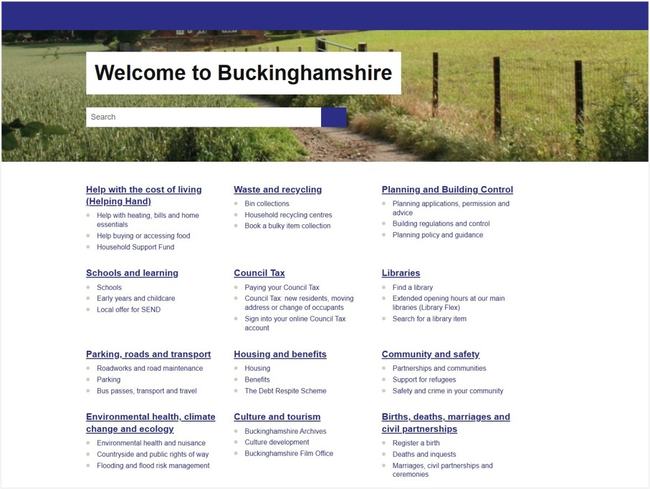
Our previous homepage design
What we wanted to improve
As a digital team, we have wanted to look at our website design for a while, and with the increase of AI use and launching our new AI virtual assistant, now seemed like the best time to do it.
We knew some things could be improved. For example, while the navigation was simple and consistent, users never really knew whether they were at the start of a journey, in the middle, or on the final pages.
We also know that residents often return to complete the same few tasks, such as check your bin day or renew a library book. We wanted to make doing these quicker and easier.
And our AI virtual assistant, which replaced our standard webchat, just lived in the small floating button. This was easy to miss or avoid.
Prototyping
We worked closely with our technology partner Torchbox to create a new design, building on our early ideas and inspiration from other council websites.
We started with an early prototype and refined it together until we felt it was ready to test with residents.
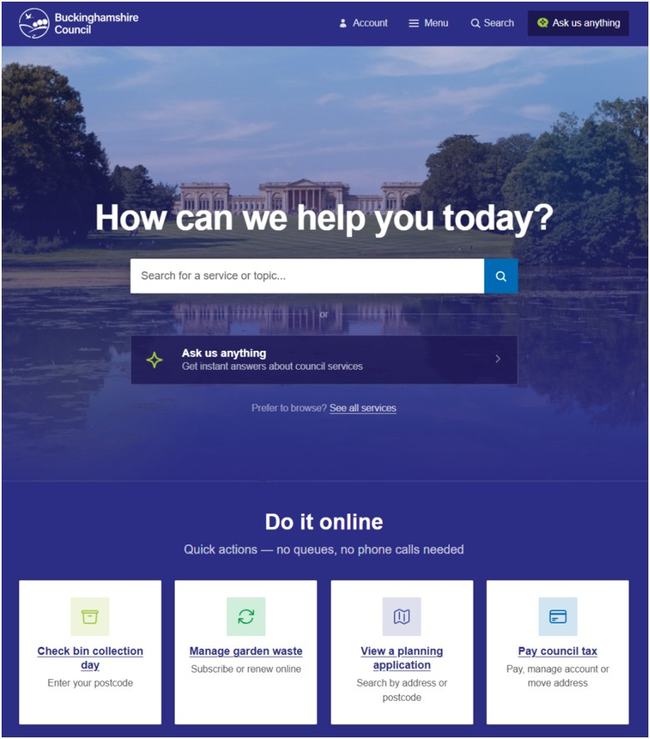
Initial design for the updated Buckinghamshire Council homepage
Testing our design
We then invited Buckinghamshire residents to try out the new website design and complete a series of common tasks.
As they worked through each task, we observed how they used the site and gathered feedback on key features, including the redesigned navigation and our AI virtual assistant. Their insights helped us understand what was working well and identify areas where we could make further improvements.
One of the strongest themes from our research was the number of service tiles on the homepage. With 17 options competing for attention, particularly on mobile devices, some residents found it overwhelming.
One person told us:
"with this many options, I'd just give up..."
In response, we simplified the homepage and reduced the number of tiles to just 9.
This feedback played an important role in refining the final design and ensuring it met the needs and expectations of the people who use our services.
A refreshed and more modern design
We kept building on our early designs, using feedback from user research to shape every stage of the process.
The final design creates a cleaner, more consistent and accessible experience, with a fresh new look that still puts usability first.
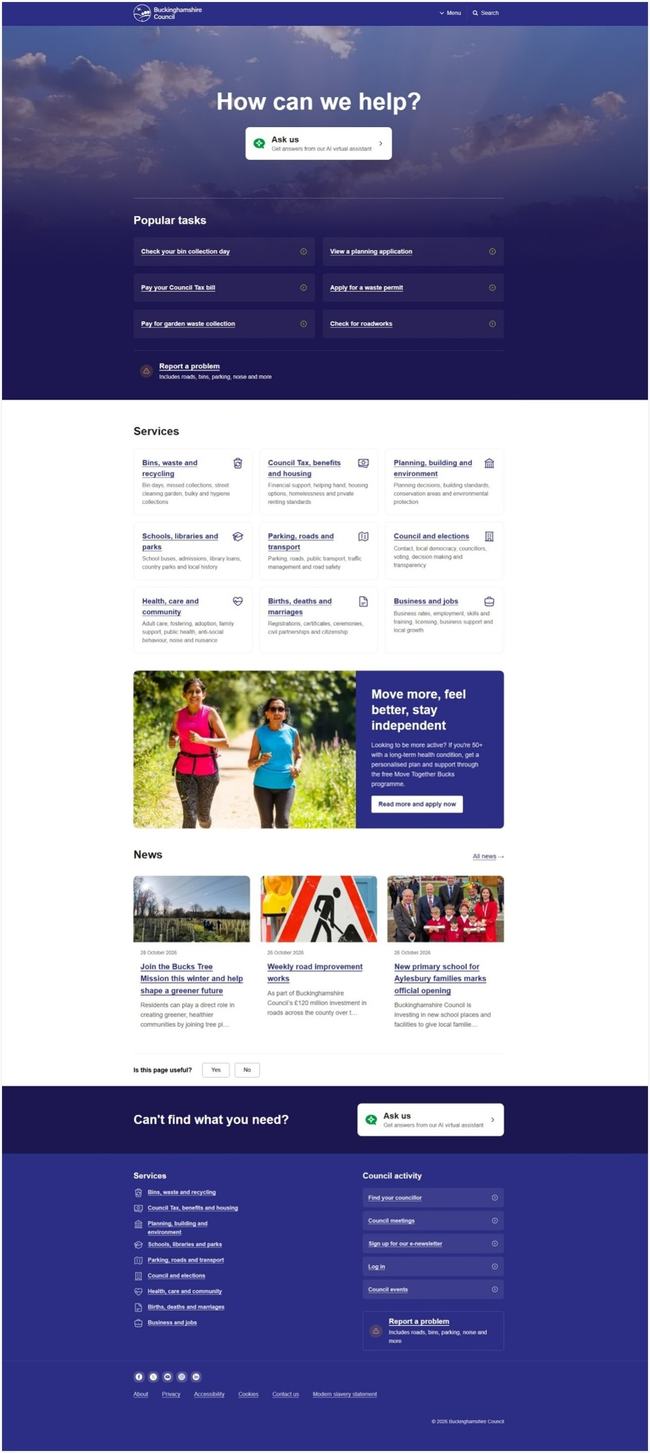
Our updated homepage
Promoting our AI virtual assistant
One of the most noticeable changes is that we've made our AI-powered virtual assistant much easier to find and use. Rather than placing a search bar at the top of the page, we've introduced a prominent “Ask us” button that opens the assistant.
Residents can ask questions in their own words, just as they would when speaking to one of our customer service advisers. The assistant helps people find information, navigate services and get answers to common questions without having to browse through multiple pages.
By bringing this support to the forefront of the website, we're making it quicker and easier for residents to get the help they need, when they need it, and helping them complete tasks with less effort.
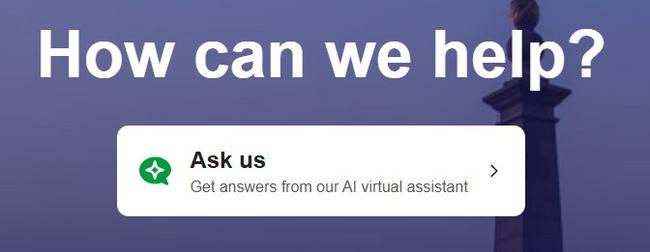
Our new call to action for opening our AI virtual assistant
Making navigation simpler
Our research showed that most people visit the council website with a specific task in mind, rather than to browse. With that in mind, we made several changes to help people find common services and information more easily.
A key part of this was introducing a clearer page structure across the site. We organised content into 3 levels:
- the homepage
- topic pages that group related information together
- task pages where people can complete a specific action
This structure creates a more consistent experience and helps ensure that users can reach the services they need within 3 clicks from the homepage.
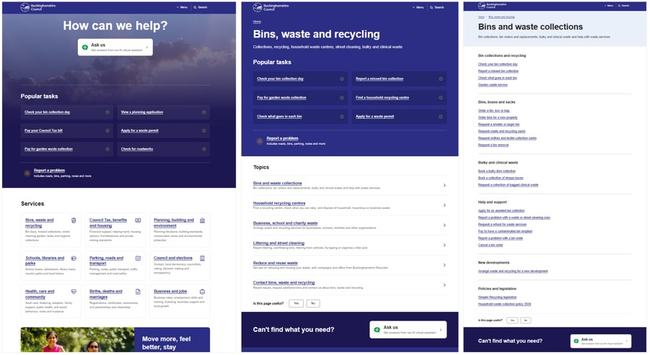
Our updated 3-level navigation
Popular tasks
We introduced a new 'Popular tasks' section to help residents get to some of the council’s most-used services and information more quickly.
By putting the most popular services front and centre, we're helping residents find what they need more quickly. The section also gives us the flexibility to highlight seasonal information, important updates and relevant services throughout the year.
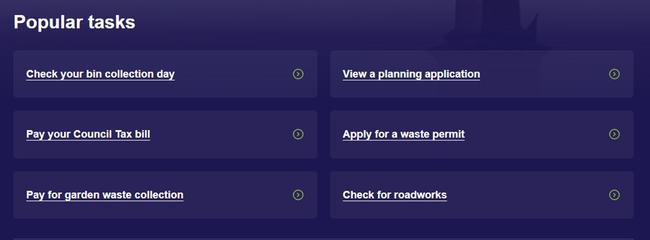
Popular tasks component
Report a problem
During our research, many residents told us that it wasn't always easy to know how or where to report an issue.
To make things simpler, we wanted to create a single place where people could quickly find the right reporting service, without needing to understand how the council is organised or which team is responsible.

Our new 'Report a problem' button sits below our popular tasks section in every area of the site
That's why we introduced a new 'Report a problem' page, bringing together a range of reporting services in one easy-to-find location. Whether someone needs to report a pothole, a faulty street light or another local issue, they can now find the right reporting route more quickly and with less effort.
By making reporting more straightforward, we're helping residents raise issues with confidence and get connected to the right service faster.
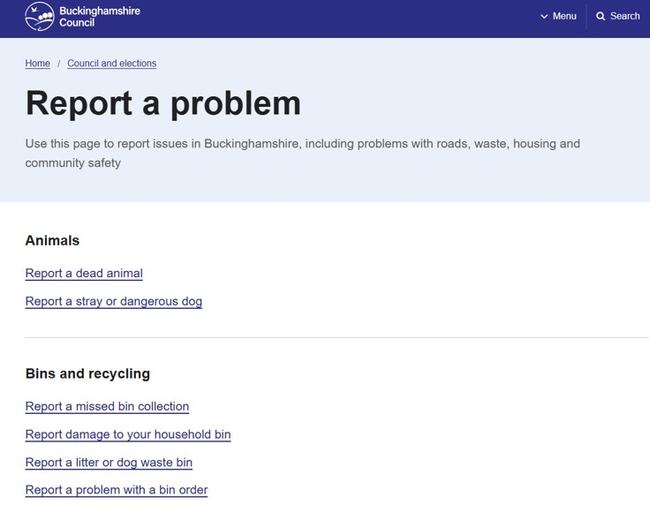
Putting user needs first
These changes are part of our ongoing commitment to creating digital services that are simple, accessible and centred around the needs of our residents.
By combining a refreshed design, clearer navigation and enhanced self-service support through our AI virtual agent, we've made it easier for people to access council services online and complete tasks with confidence.
This marks an important step in our wider digital transformation journey. As we continue to learn from user feedback, analytics and research, we'll keep looking for ways to improve the online experience and make our services even easier to use.