Lifting the lid on Stoke Road Railway Bridge
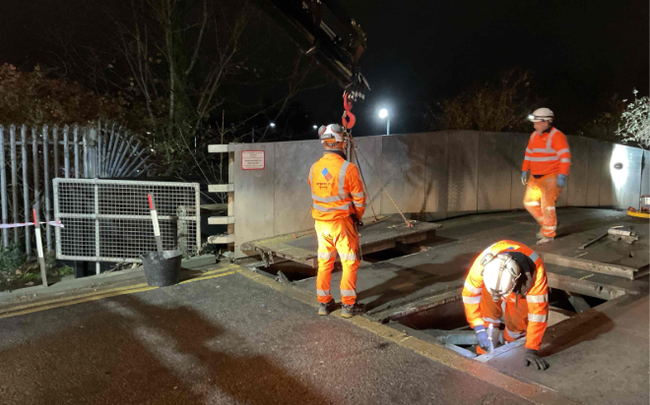
Essential inspections have been completed on Stoke Road Temporary Railway Bridge in Aylesbury, which plays a crucial role in keeping traffic moving smoothly over the busy rail line between Aylesbury and London Marylebone.
Assessing the bridge's condition for the future
Installed in 2011 and designed for a 40‑tonne maximum load (the weight of approx. 6 and half elephants!), the Stoke Road Temporary Railway Bridge is a key part of the local transport network - and ensuring it remains safe and reliable is a top priority.
In late 2025, a detailed inspection and testing programme was commissioned to assess the bridge's current condition and estimate its remaining operational life. The goal was to identify any early signs of wear or defects and to help plan future maintenance so the structure remains safe for years to come.
The project involved a detailed programme of visual inspection and non-destructive testing (NDT). To carry out this work, engineers needed full access to the steel deck panels. This involved removing and replacing around 550 M20 fixings - large, high‑strength bolts about as thick as a 20p coin - which hold the bridge's steel panels firmly in place.
Each panel was lifted using a Scania G460XT fitted with a Fassi F545RA.2.25 XE‑Dynamic crane. This specialist equipment provided the strength, reach, and precision needed to lift the heavy panels safely within a tight working area.
Using this combination allowed the team to complete the lifting operations efficiently. The equipment’s strength, reach, and safety features were essential for carrying out the inspection and repairs without damaging the bridge or putting workers at risk. It also allowed the work to be completed within tight timeframes, minimising disruption to road users.
- Scania G460XT: This is a heavy-duty truck built for tough jobs. It’s designed to carry and operate large, heavy loads safely, even on construction sites or uneven ground.
- Fassi F545RA.2.25 XE‑Dynamic crane: This is a high-capacity, truck-mounted crane. It can lift very heavy objects (like the steel bridge panels, each weighing around 770kg) with precision. The crane is remote-controlled, has advanced safety features, and can reach out a long distance from the truck, making it ideal for working in tight or awkward spaces.
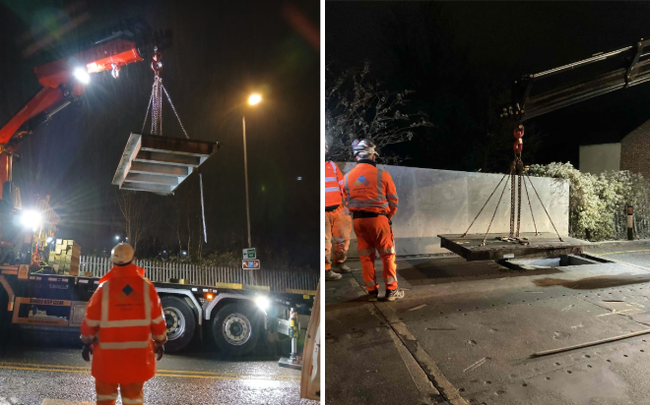
Using specialist equipment to lift the steel deck panels on Stoke Road Railway Bridge, Aylesbury
Maintaining safety at every step
All lifting and inspection activities were completed under strict safety controls. This included:
- using certified lifting chains
- banksman supervision
- compliance with the Lifting Operations and Lifting Equipment Regulations (LOLER)
- adherence to GS6 guidance, ensuring safe working near overhead power lines and electricity cables, which can be extremely dangerous if touched by cranes or other equipment.
At the same time health, safety and environmental management were also central to the scheme. This included:
- full risk assessments and method statements prepared and reviewed ahead of the work beginning
- robust controls to manage key risks, such as manual handling, working at height, lifting operations, traffic interface, and noise
- Environmental protection measures, including spill kits, personal protective equipment (PPE) and dust control with emergency procedures in place at all times.
The site was surveyed for hazardous materials, and no asbestos or other hazards were identified.
A closer look inside the bridge
With the deck panels removed, the engineering team carried out a comprehensive Non‑Destructive Testing (NDT) survey. This is a way of checking the condition of a structure such as a bridge, without causing any damage to it. Instead of cutting into the metal or taking things apart, engineers use special tools and techniques to look for problems such as cracks, corrosion, or weaknesses in the materials. Common NDT methods include visual inspections, ultrasonic testing (using sound waves), magnetic particle testing, and measuring the thickness of coatings.
The main advantage of NDT is that it allows for a thorough inspection while keeping the bridge or structure intact and safe for continued use. This helps identify any issues early, so repairs can be planned before problems become serious.
All findings were carefully recorded with photos, measurements, and exact location references. This data provides an accurate picture of how the bridge is ageing and what maintenance it may need in the future.
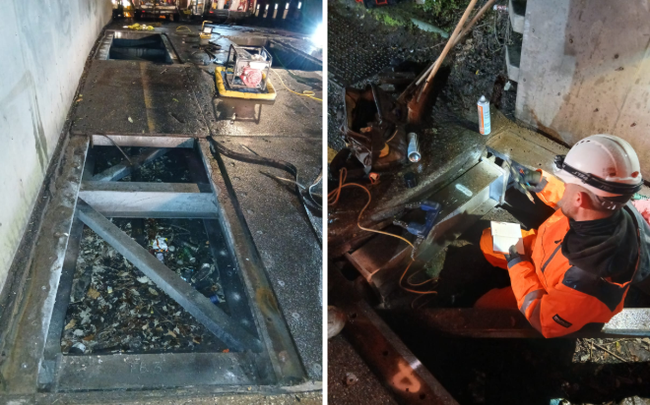
Non-Destructive Testing surveys being carried out by engineers
Working together to minimise disruption
To reduce the impact on the local community, the works took place over 5 days, with night‑time road closures from 8pm to 6am.
The scheme was delivered through strong collaboration between Buckinghamshire Highways and its alliance partners Balfour Beatty Living Places (as principal contractor) and AtkinsRéalis (design and inspection), as well as Topbond PLC and Traffic Safety & Management.
All site personnel, subcontractors, and visitors received regular briefings and updates. The project team coordinated and engaged closely with Network Rail, given the bridge's location over a live rail line, and local residents and businesses were informed in advance about road closures and diversion routes.
A successful, safe, and efficient operation
The inspection programme was completed safely, on time, and without any major incidents. The detailed data gathered will now help us plan future maintenance with confidence, ensuring the bridge continues to serve residents, commuters, and businesses well into the future.
This project highlights the value of effective planning, collaborative working, and a strong commitment to health, safety, and the environment - all essential to maintaining the county's vital transport infrastructure.