A Life in Archaeology – Mike Farley
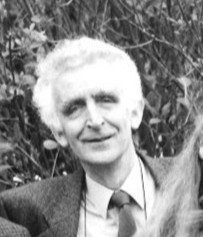
With the ongoing consultation over the proposed changes to the National Planning Policy Framework, the archaeology team has been thinking a lot recently about the changes in archaeology in the planning system throughout our lifetimes. One person who knows better than most about the impact on the archaeological profession following the inclusion of archaeology in planning policy is former Buckinghamshire County Archaeologist Mike Farley. Mike has spent over 50 years protecting and promoting the archaeology of Buckinghamshire, so we asked him to share some thoughts and stories from across his life and career.
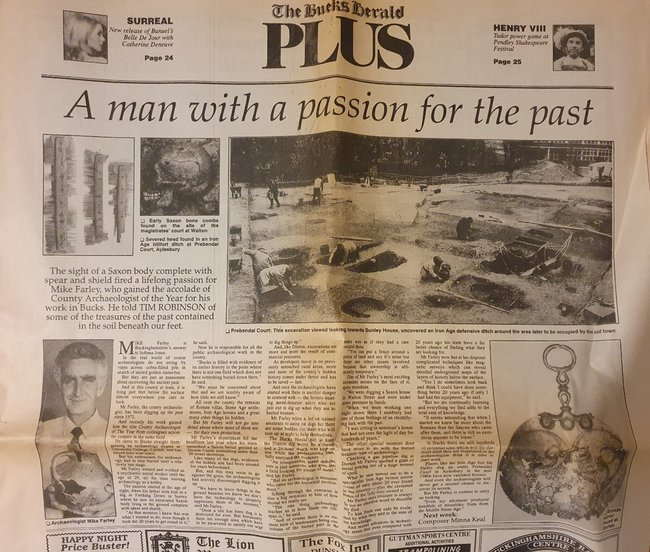
Bucks Herald, August 1992
Mike’s first encounter with archaeology was a school broadcast where an intrepid explorer would go back to certain periods and explore them. His dad then took him to see a local Hope-Taylor excavation of a Saxon cemetery, where he saw a burial, complete with sword and grave goods, he couldn’t resist and a love of archaeology had been started. A career in archaeology wasn’t really the norm though, and Mike’s first career was as a Psychiatric Social Worker, returning to University to study archaeology in the late 1960s.
In 1971 Mike commenced work as the Field Archaeologist based in the then County Museum. Part of a small team, he worked alongside another archaeologist who looked after the collections and who occasionally did a small amount of fieldwork, and the museum curator, Christopher Gowing.
Faced with the development of Milton Keynes, Christopher Gowing had some input into the creation of the well-funded MK archaeological unit. Over the years he had also occasionally put dots on a 6” map with a marginal note when he heard of the discovery of significant finds or sites. This was an early example of a SMR (Sites and Monuments Record), the for precursor of the modern HER (Historic Environment Record).
Archaeology wasn’t a consideration within the planning system until 1990. Prior to that, there was a very small budget for museum staff to assist with “emergency” excavations, helping to record chance discoveries which were about to be destroyed. Mike’s first significant work was at Fulmer where he was meant to be finding a churchyard but instead found a Mesolithic site.
The excavations at Fulmer produced some potential long term volunteers and Mike utilised this pool of helpers to form ‘CMAG’ (County Museum Archaeological Group). Members of CMAG were very helpful in providing emergency on-site assistance, for example at the leper cemetery in High Wycombe. They were also enthusiastic about fieldwalking, but these works inevitably recovered numerous finds which needed to be processed and catalogued. Members of the group would meet at the museum once a week to wash pot as well as doing literature and map searches which all led to an embryo card-index based SMR – this being all prior to computers!
High profile discoveries such as the Rose Theatre in London, as well as the Philip Rahtz Penguin book on Rescue Archaeology and pressure from others, gradually led to serious worries over the protection of known unscheduled sites in the face of development. The CBA (Council for British Archaeology) and the creation of the Institute of Field Archaeologists (now CIfA, the Chartered Institute for Archaeologists) led to more focus on the issue and ultimately to PPG 16 (Planning Policy 16, the first archaeology specific planning policy). The inclusion of archaeology as a material planning consideration resulted in many local authorities appointing HER officers for the first time. Within Buckinghamshire, the museum’s budget was stretched to cover the salary of two staff to both maintain the SMR and to comment on planning applications. It was not until a chance encounter in Market Square with one of the senior town planners, that Mike managed to ask whether he and his team would have more effect within the planning department ….the answer was yes and the archaeology team have been part of the council ever since!
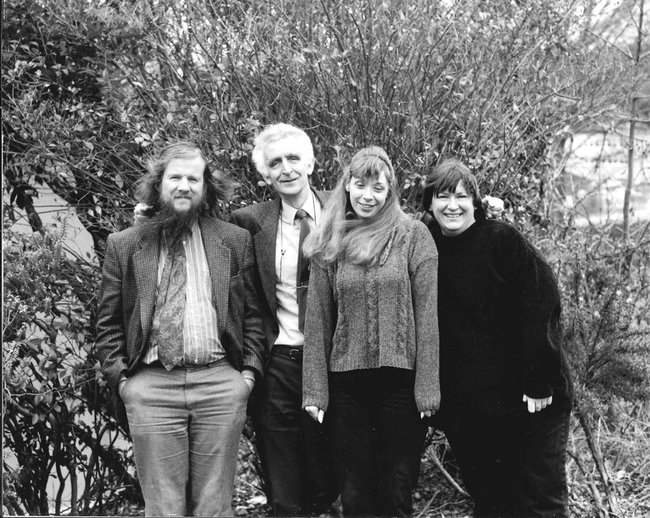
Photo of Mike with colleagues at Halton, 1998
Whilst the introduction of archaeology into the planning system has safeguarded numerous sites, and allowed for greater research and understanding of archaeological remains, it was not without its consequences. The need for greater numbers of archaeologists led to a rapid growth in commercial archaeological companies, and thus unfortunately the demise of the volunteer groups such as CMAG. Rules around access, insurance, etc slowly meant no more pot to wash and whilst no one doubts the importance of a professional workforce, Mike still feel sad about the relegation of so much enthusiasm and expertise to the side lines.
Mike retired from the council in 1998 but was certainly not finished with his life in archaeology! He has since worked as freelance archaeologist, published numerous articles and books, given talks and provided practical advice to local societies, worked hard on the committee of the Buckinghamshire Archaeological Society, been flown in a plane around the county to take aerial photographs of all of the historic earthworks and continues to assist the current archaeology team whenever we ask. His expertise on subjects such as the Aylesbury Iron Age hillfort ditch, or Saxon ceramics is invaluable!
Finally, we asked Mike for a favourite memory…
“So, favourite memory/site .. hard to choose but probably ‘discovering’ the Dorton amphora burial, or initially arranging and eventually writing-up Aylesbury’s hillfort - post-retirement free of charge! “
and of what he is most proud…
“Proud of … creating SMR, CMAG, providing local authority planning departments with maps of notifiable areas and taking numerous air photos at no cost to the council (apart from a sandwich or two!).
With some guidance from myself also delighted that some museum-excavated sites have been published by volunteers e.g. Missenden Abbey.”