Waterlogged Wood – following the journey of Buckinghamshire’s rare Roman Wooden Figurine
Waterlogged wood on archaeological sites is wood, either in its natural state or having been used or modified by people, that survives in wet or waterlogged environments. These may be bogs and wetlands, old river channels (known as palaeochannels), or old wells or pits.
In December 2025, Historic England published their updated guidance on the Excavation, Recording, Sampling and Conservation of Waterlogged Wood https://historicengland.org.uk/images-books/publications/waterlogged-wood.
Waterlogged wood in Buckinghamshire is not common but equally it is not unheard of, with evidence of old ladders, tools and elements of water related structures having been found in locations across the county. However, no one was prepared for the amazing discovery of a 70cm tall wooden figurine from a Roman site in the north of the county as part of the HS2 archaeological works.
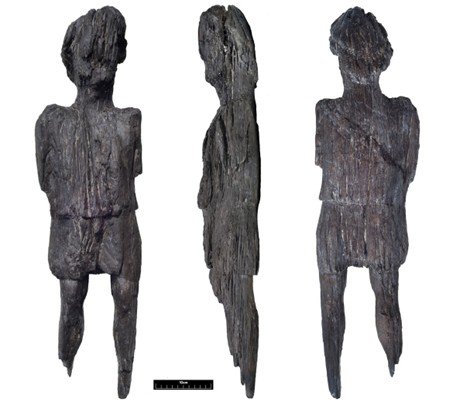
Roman Carved Wooden Figure uncovered by HS2 archaeologists in Buckinghamshire ©https://www.hs2.org.uk/building-hs2/archaeology/three-bridge-mill/
This rare and fragile discovery was made whilst a team of archaeologists from Network Archaeology excavated a large waterlogged ditch as part of enabling works for HS2. Whilst totally unexpected, the team quickly realised what they had found at the bottom of the ditch and the excavation of the feature took on new significance.
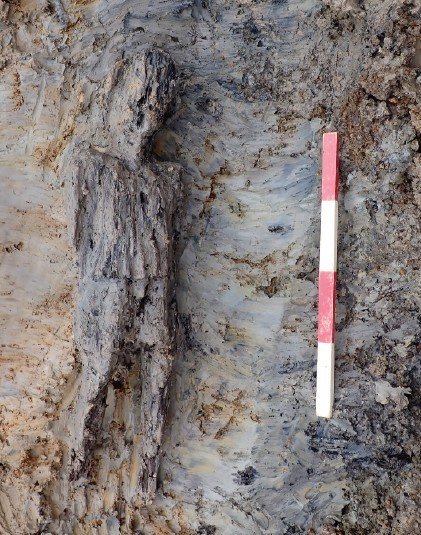
Wooden figurine in situ ©Network Archaeology
Great care was taken to excavate the figurine, but whilst it looked to be well preserved, the time the wooden figure had spent in the waterlogged conditions meant that biological and chemical degradation would have occurred and the wood cells would have filled with water in place of the original cellulose. This meant that sudden exposure to oxygen in the air would have resulted in rapid physical and chemical degradation and ultimately the loss of the figurine. To prevent this, it was placed immediately into a large tub of water and transported for specialist conservation to York Archaeology.
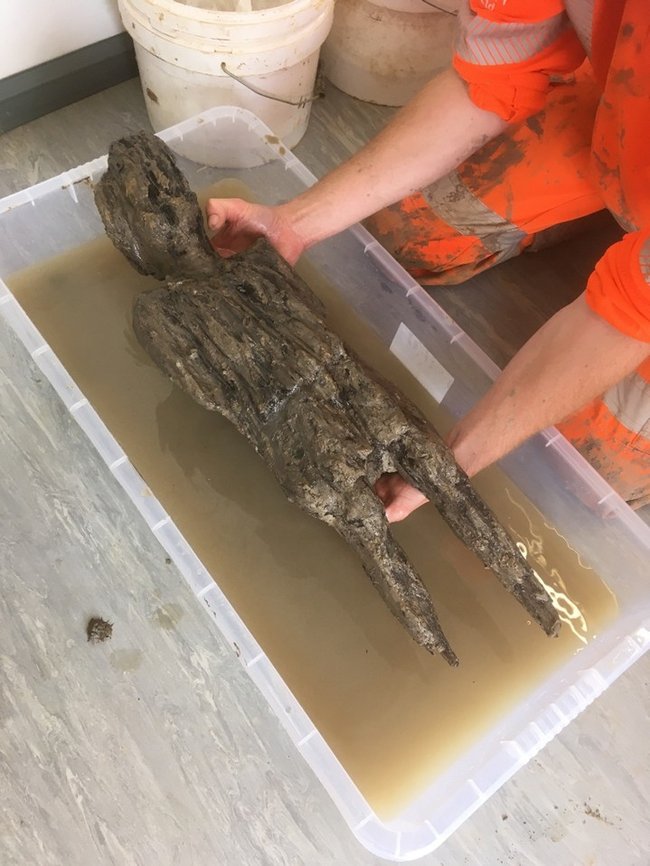
The wooden figurine was stored in water immediately after excavation ©Buckinghamshire Council
Whilst at York Archaeology, specialist techniques were undertaken to achieve these very specific aims;
- Clean, stabilise and bring the wood to dry storage.
- Package for long-term archival storage.
To achieve this the figurine was initially washed under cold running tap water to remove any remaining soil and silt before being immersed in a special solution for 24 hours to remove iron staining. It was then re-rinsed with tap water and left to soak in tap water for 48 hours. The wood was then placed into a treatment tank which contained a mix of water and Polyethylene glycol (PEG).
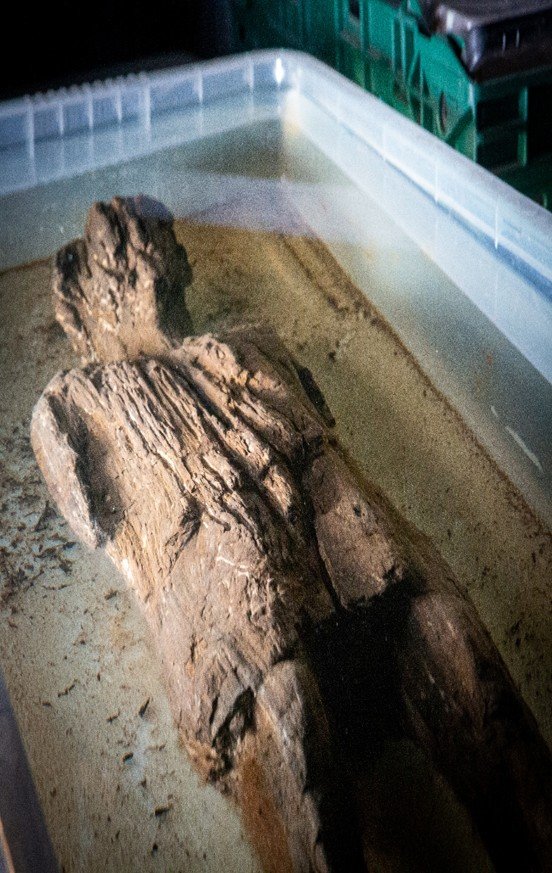
The wooden figurine submerged in PEG ©York Archaeology
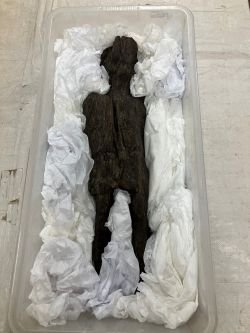
PEG is a bulking agent which is used to replace the weakened wood cells to provide structural support. The quantity of PEG within the solution the wooden figurine was immersed in was slowly increased over a number of months, until all of the wood was penetrated with PEG. The figurine was then freeze-dried at -40° C, and then dry brushed and lightly swabbed before the object was left to thoroughly air-dry before packaging. Finally, the figurine was packaged in a lidded plastic crate with support and cushioning.
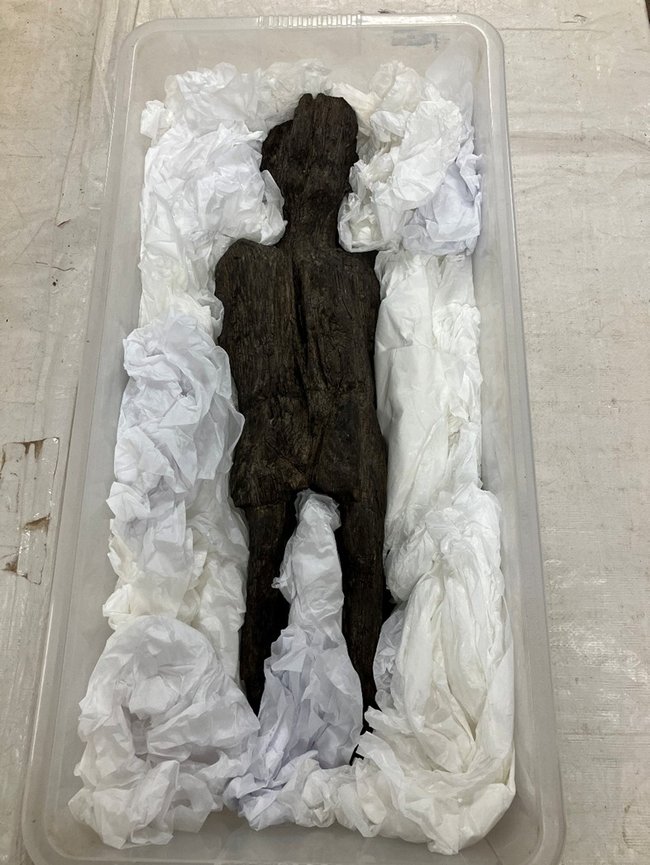
Wooden figurine in protective packaging ©Buckinghamshire Council
The figurine was assessed when it first arrived at York Archaeology. Carved from a single piece of wood and in surprisingly good condition, some initial assessment was carried out, which considered details such as the type of wood, the state of preservation and what details could be identified which may help establish who the figure is depicting, male or female, human or deity. Now that it is in a stable condition, it will be further assessed and reported upon as part of HS2’s post-excavation programme with the long term hope that it will eventually be able to be placed on display for everyone to see this remarkable artefact for themselves.
UK’s largest ever archaeology programme for HS2 moves into the next phase
With thanks to the teams at Network Archaeology and York Archaeology for assistance with the production of this blog.